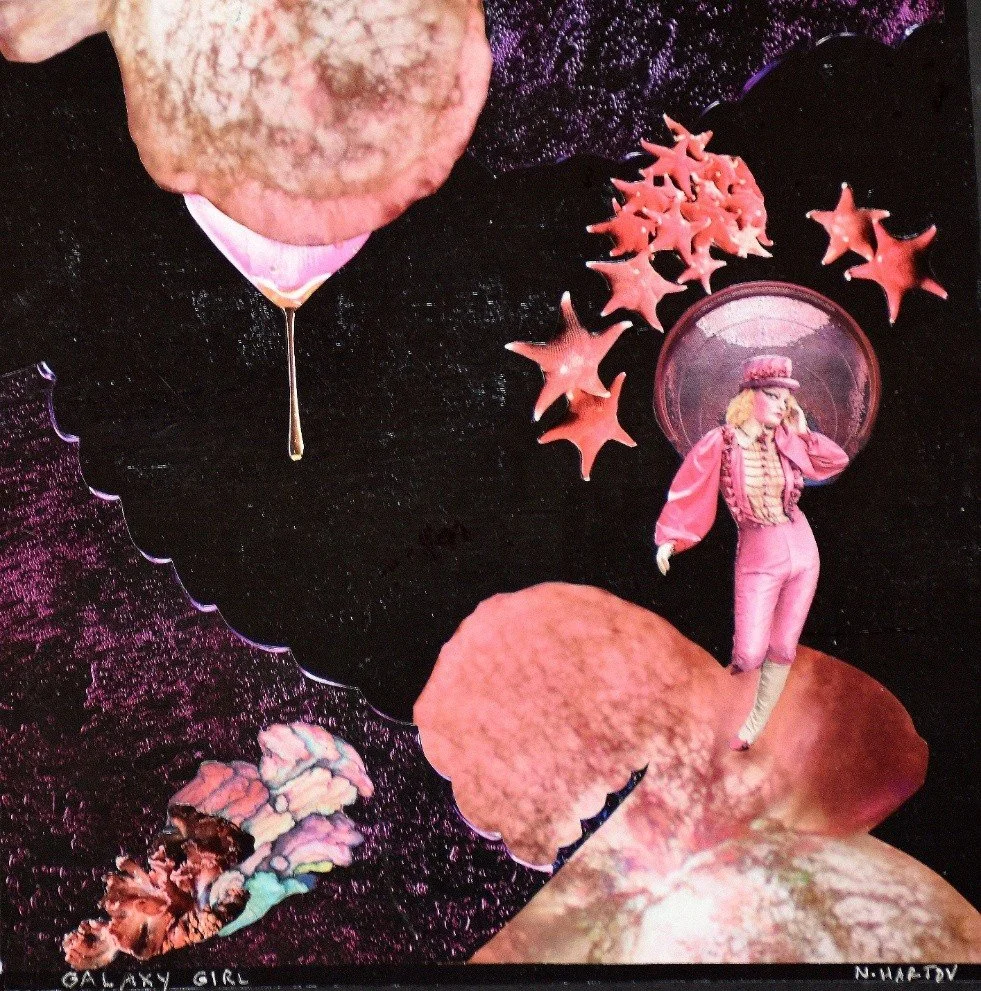
Three moons
I know of a world with three moons, two of which are invisible, bouncing against the night's felted borders, yanking the masts in the harbors, the lonely palm trees, the dreams of teenagers.
In the young florist's ankles, awash in dawn, or in the mailman's complicit smile when he hands you a package from Madagascar, or in the librarian's long fingers, not wanting to depart with the marbled, old book, it is everywhere: the three moons' disquietude, their irrational mathematics, the uninterrupted dialogue never repeating a word.
Whoever lets his eyes listen finds it in the centipede's hesitations and, after the night's tide leaving the apartment, in his life's debris. It is at work everywhere, its mesmerism groping everyone, everyone reveling in it, unknowingly, like the moais facing the sun.
Only once was this world interrupted. Nobody survived it, so the story tells itself: only once, the three gravitations tangled, pulled, hurt, and snapped, making the moons, all three, collide. For what seemed an eternity, everything gasped. In the end, the world was reset, in non-REM; a blissful stupor reached all its corners, and, after a moment barely smelling of a rose, everything was erased.
What followed was our beginning. The moons caromed, hurtling through nothing, plowing nothing with something, shooting a howling hole through the mountain of silence, putting a bullet hole of existence through non-existence.
Eventually, what followed was us. You.
I know of a world with three moons, two of which are invisible, where everyone bobs a lifetime of disquietude, unknowingly praying for a serenity, smelling, barely, of a rose.
_
The Ekphrastic Review May 17, 2026